Two Institutions. One Yogic Journey.
A unique collaboration between Parmarth Niketan, Rishikesh, and The Yoga Institute, Mumbai, combining sacred ashram living with structured Yoga education.

Master the foundations of classical Yoga through the combined wisdom, experience and traditions of two respected lineages.
Next batch: Dates to be announced View fees ↗
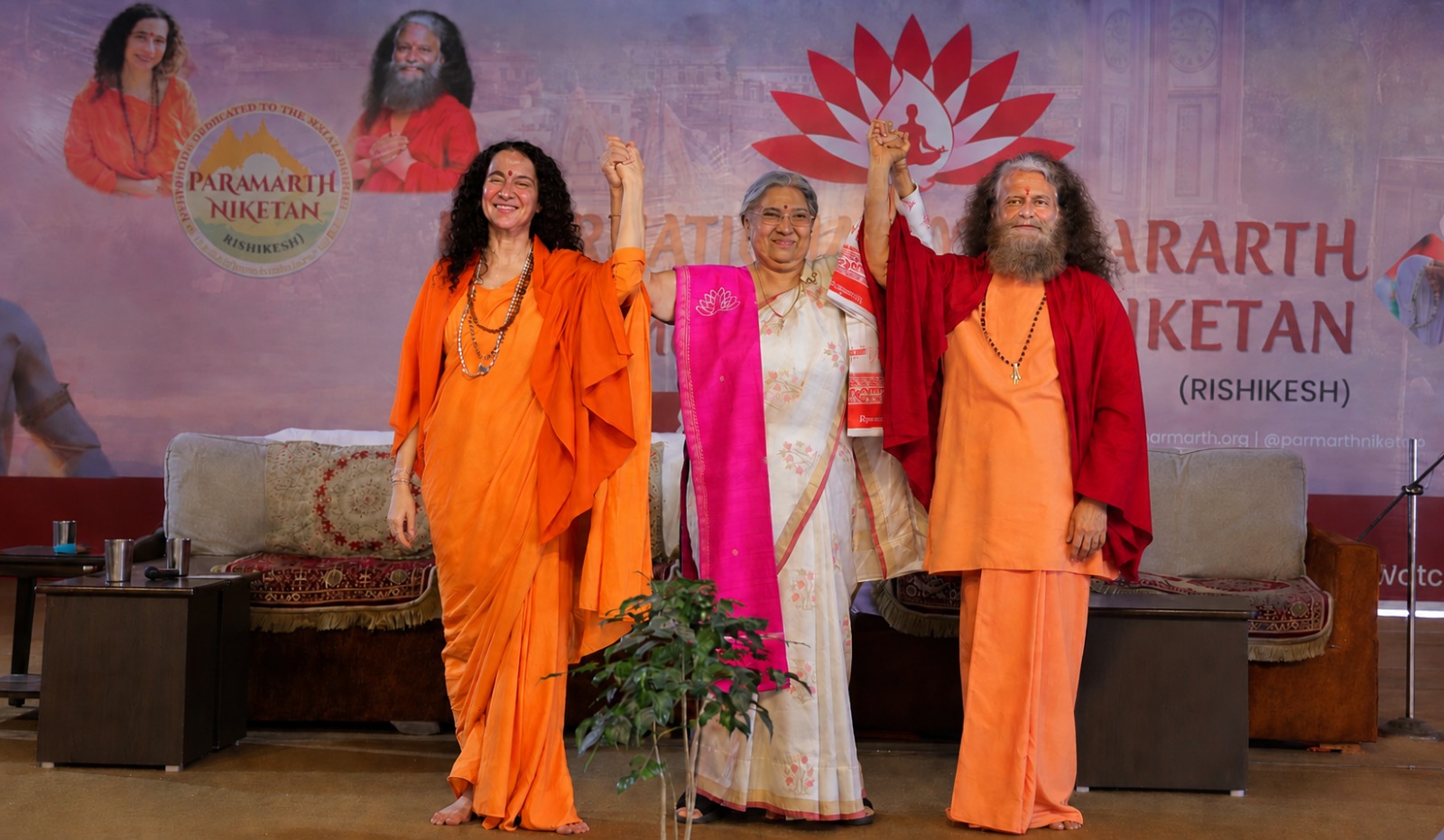
A unique collaboration between Parmarth Niketan, Rishikesh, and The Yoga Institute, Mumbai, combining sacred ashram living with structured Yoga education.
Learn classical Yoga through asana, pranayama, meditation, philosophy, teaching methodology and yogic living.
Experience Yoga beyond the classroom through daily ashram life, Yagna, Ganga Aarti, discipline and reflection.
Develop the knowledge, confidence and communication skills required to guide Yoga classes safely and effectively.
Why choose this course

Learn through the combined strengths of Parmarth Niketan and The Yoga Institute.

Study and practise in Rishikesh, surrounded by the Himalayas and holy Ganga.

Spend a month at Parmarth Niketan with spiritual practices and conscious living.

Learn from The Yoga Institute's structured Yoga education since 1918.

Become part of a global network of trained and connected Yoga teachers.

Go beyond asana through meditation, prayer, seva and reflection.
Participate in Yagna, Satsang and Ganga Aarti at Parmarth Niketan.
Build the confidence to practise and teach through guided experience.
Our unique offerings
A thoughtfully designed programme combining classical Yoga education with an immersive Himalayan ashram experience.
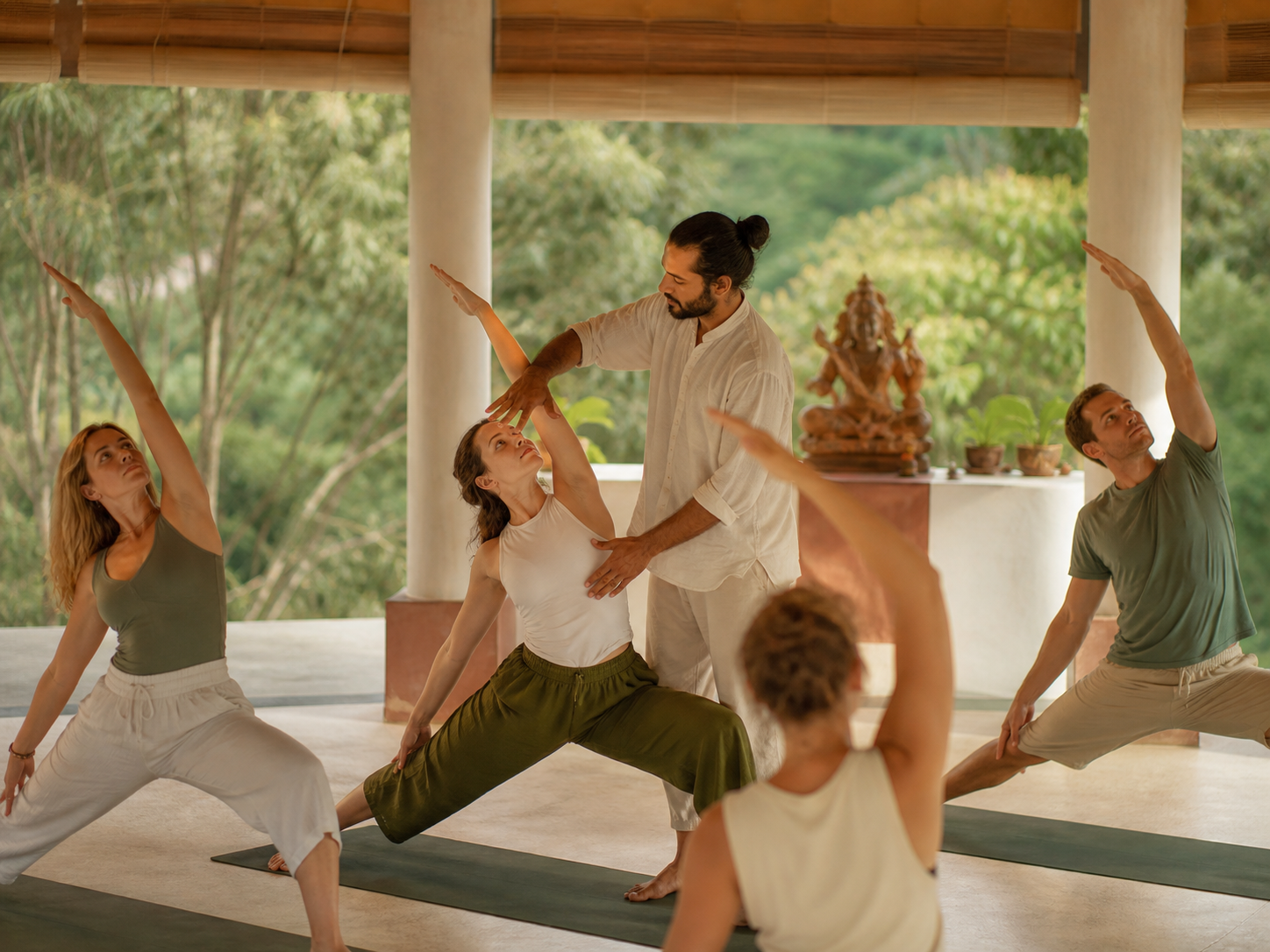
Study asana, pranayama, meditation, Yoga philosophy, anatomy, Yoga wellness and teaching methodology.
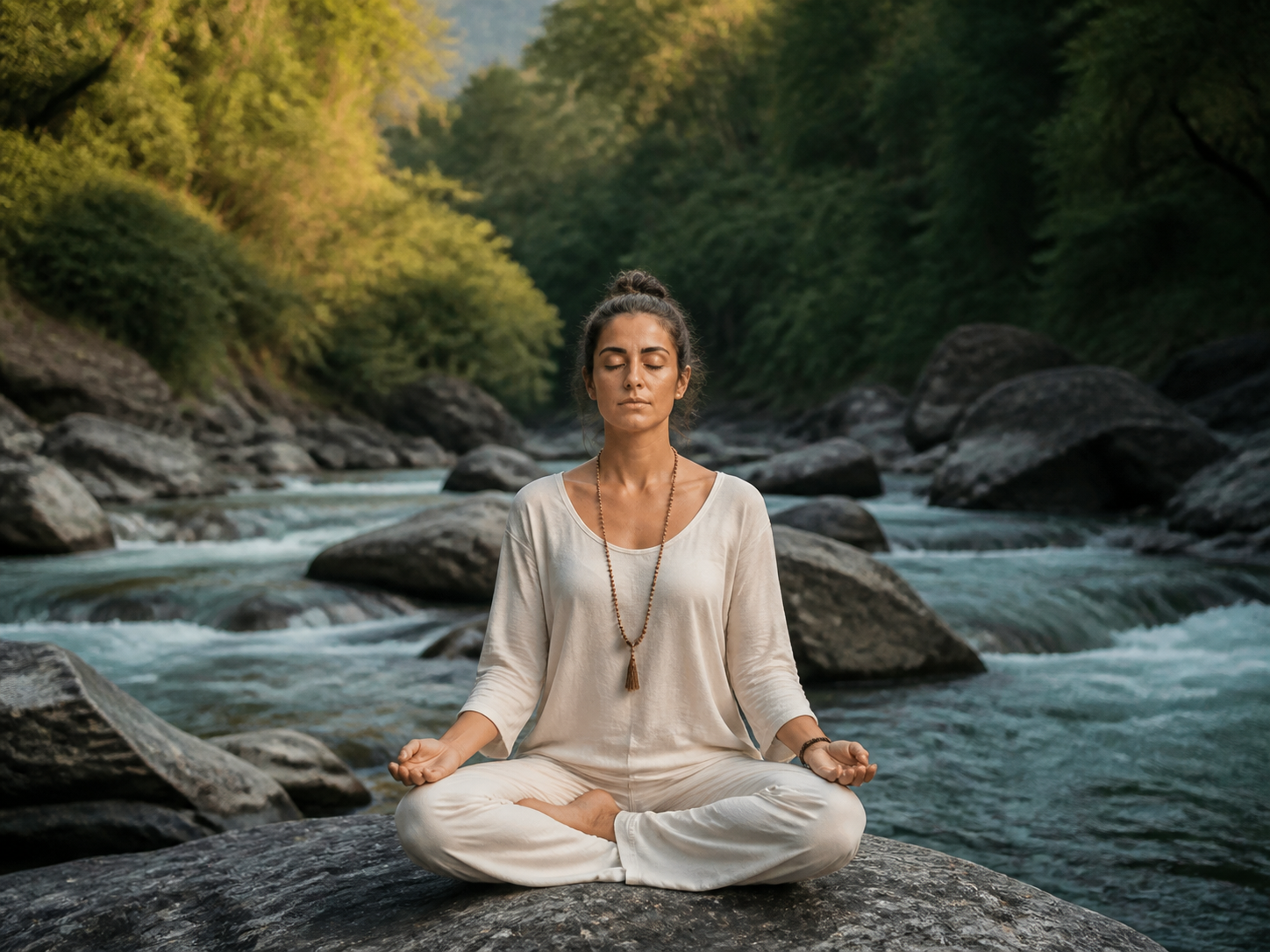
Learn the structured and authentic teachings of The Yoga Institute, rooted in classical Yoga and the Yogendra tradition.
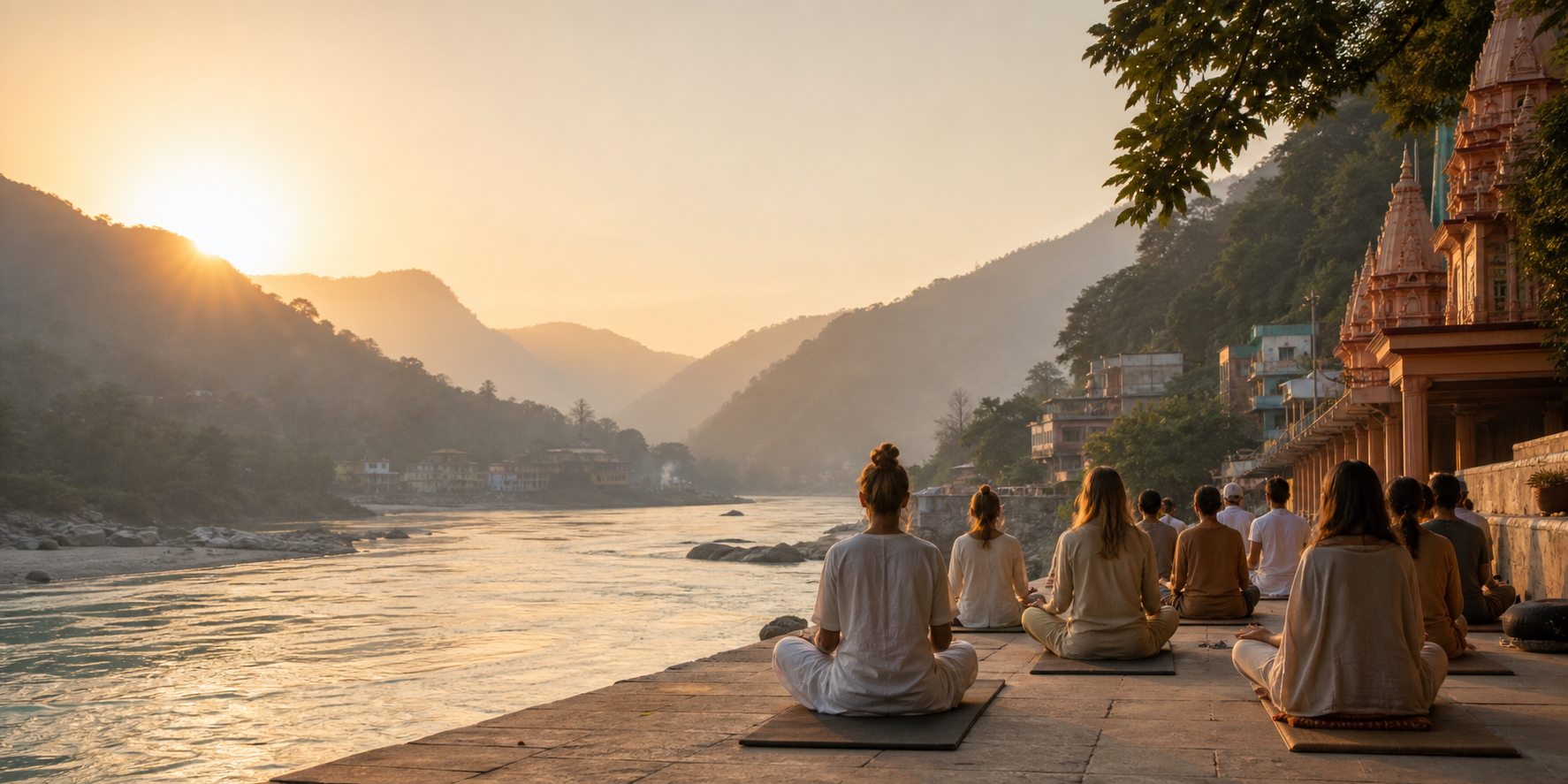
Experience the living spiritual traditions of Parmarth Niketan through Yagna, Ganga Aarti, prayer and ashram living.
Develop confidence through supervised teaching practice, communication, sequencing and class management.
Understand how Yoga can influence your habits, relationships, mental wellbeing and everyday life.
Study in Rishikesh, traditionally regarded as one of the world's foremost centres for Yoga and spiritual learning.
200-Hour Yoga TTC
Learn from experienced faculty from The Yoga Institute, Mumbai, rooted in the authentic Yogendra tradition and dedicated to quality Yoga education, while immersing yourself in the sacred spiritual environment of Parmarth Niketan, Rishikesh.
Explore the origin, evolution and true purpose of Yoga, and the philosophy that shapes a yogic lifestyle.
The history and classical foundations of Hatha Yoga, and the texts that still guide practice today.
Maharishi Patanjali's foundational text and the Ashtanga Yoga path toward mental clarity and liberation.
The human body's systems, and how Yoga supports their health.
Principles of healthy living through Yoga, diet, lifestyle and mental balance.
How stress and psychosomatic disorders arise, and how Yoga helps manage them.
A broad range of practices and techniques for reaching a meditative state.
Communication and teaching strategies to guide students with clarity and confidence.
Classical Yoga asanas in the Yogendra style, plus kriyas and pranayamas for holistic wellbeing.
Course completion
On successful completion of the course requirements, participants will be:
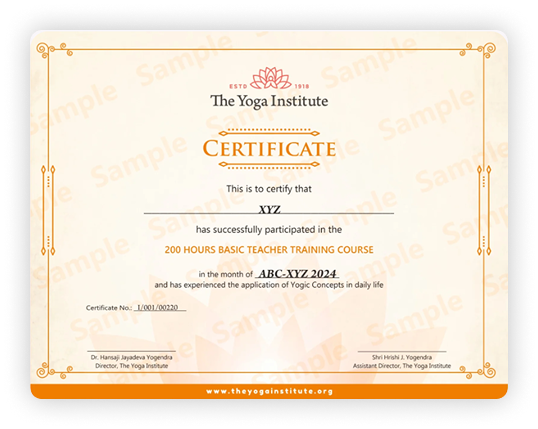
Issued jointly by Parmarth Niketan and The Yoga Institute.
A recognised foundation for structured Yoga teacher education.
Continue your teaching journey with an internationally recognised credential.

Benefits of the course
Transform your practice, understanding and approach to Yoga.
The TTC journey
From uncertain practice to confident teaching, here's what changes.
Your path forward
Build, deepen, and master your Yoga practice with confidence.
From Learning to Lifelong Practice
Use your knowledge and practical training to guide Yoga sessions with greater clarity and confidence.
Continue developing a disciplined personal practice rooted in Yoga.
Carry the principles of Yoga into your relationships, work, habits and everyday life.
A Yoga teacher's journey continues through practice, study, reflection and experience.
The Parmarth Experience
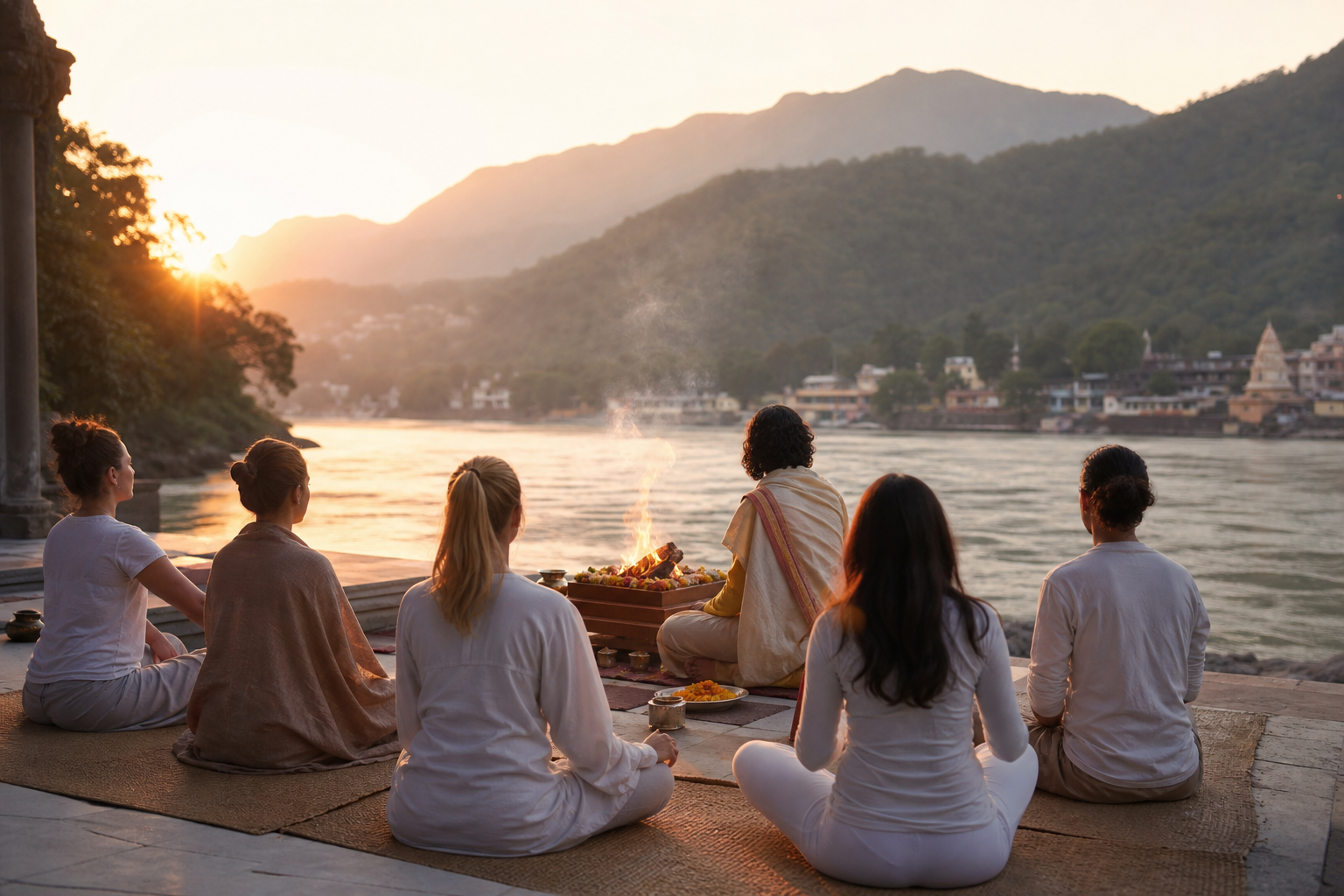
Begin your day by connecting with the sacred traditions of the Ashram.
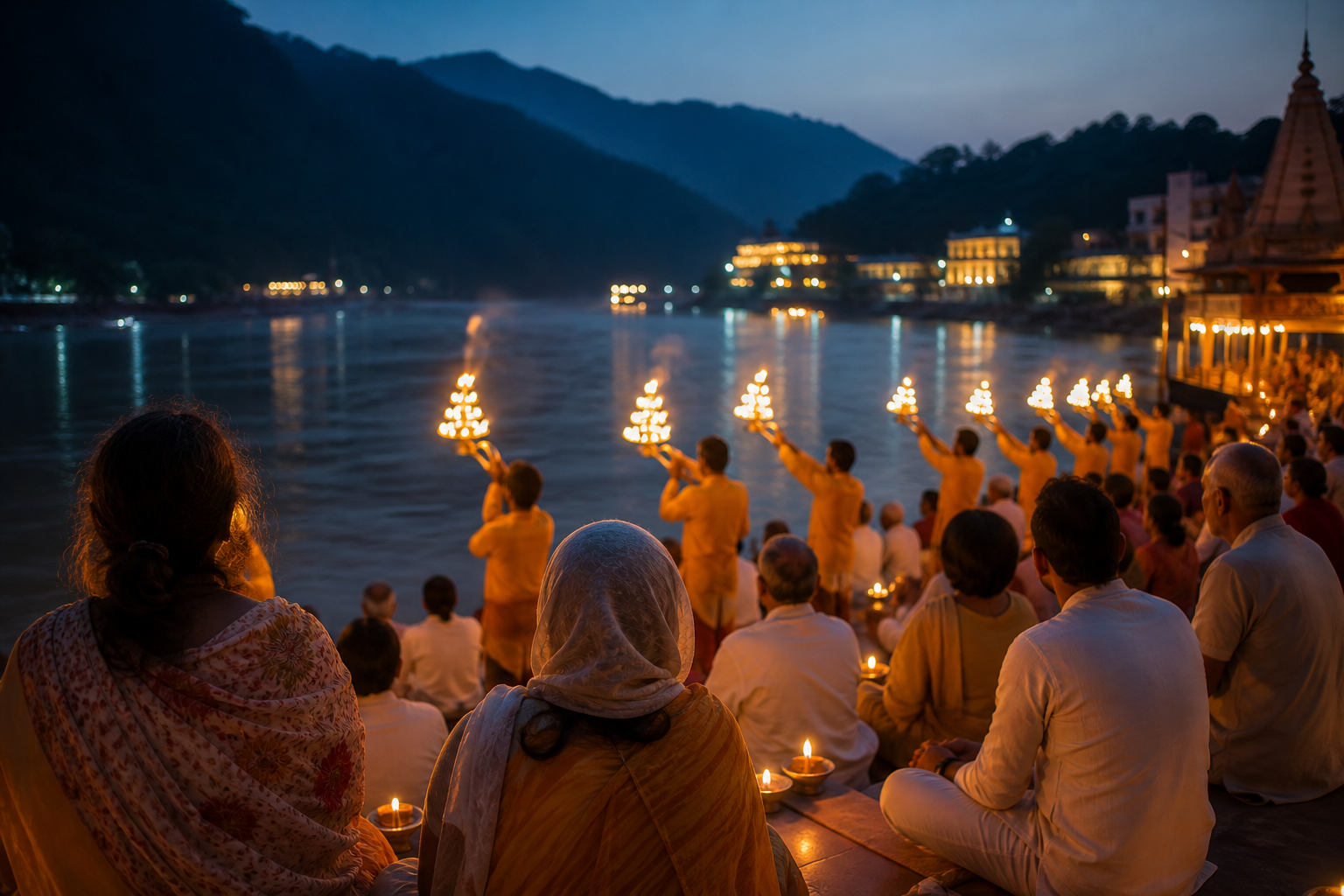
Experience the profound atmosphere of the evening Ganga Aarti on the banks of Mother Ganga.
Create space for reflection, contemplation and deeper understanding.
Experience a disciplined, simple and mindful way of living.
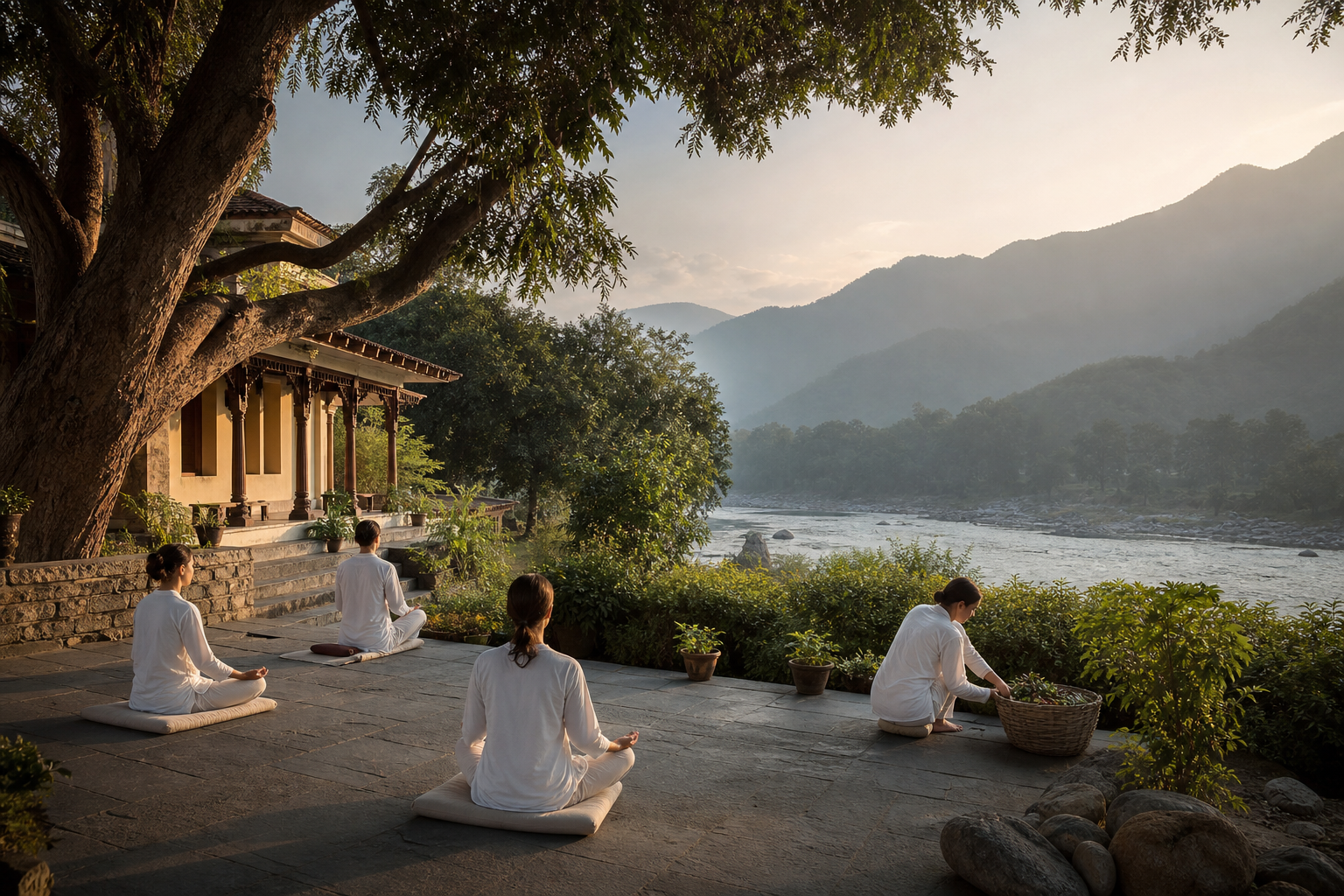
Learn in the peaceful environment of the Himalayas, surrounded by nature and the sacred Ganga.
Understand Yoga as a practice that extends beyond oneself into service and responsible living.
Student Facilities
Stay within the Parmarth Niketan campus and experience an immersive residential learning environment.
Dedicated spaces for daily Yoga practice, learning and teaching sessions.
Nutritious vegetarian meals that support the discipline and rhythm of the programme.
Experience the unique atmosphere of the Ganga and the Himalayan surroundings.
Access the facilities and spaces available to students within the Parmarth Niketan campus.
About the Collaboration
A renowned spiritual institution on the banks of the holy Ganga, offering an immersive environment for Yoga, meditation, spirituality, service and conscious living.
Founded in 1918 by Shri Yogendraji, The Yoga Institute carries a legacy of structured classical Yoga education and has trained generations of Yoga teachers.
This programme brings together Parmarth Niketan's spiritual and Himalayan environment with The Yoga Institute's structured approach to classical Yoga education, creating a learning experience that combines practice, knowledge, discipline and inner growth.
Find answers to the most common questions about the 200-Hour Yoga Teacher Training Course.
The course is a collaborative Teacher Training Course conducted by Parmarth Niketan, Rishikesh and The Yoga Institute, Mumbai, combining the strengths and expertise of both institutions.
The entire course will be conducted on campus at Parmarth Niketan, Rishikesh.
The course is a one-month intensive residential 200-Hour Yoga Teacher Training Course.
Yes. This is a fully residential, on-campus programme.
Anyone with a sincere interest in learning Yoga, deepening their practice, or becoming a certified Yoga teacher may apply. Prior teaching experience is not mandatory.
No. Prior Yoga experience is not required. The programme is open to beginners as well as those with previous experience.
Yes. Participants who successfully complete the course requirements, including attendance and assessments, will be:
Yes. 80% attendance is mandatory. Participants are expected to attend all sessions and successfully complete the course requirements.
The schedule typically includes guided asana practice from 6:00 AM–8:00 AM, breakfast and a short break at 8:30 AM, morning Yagna, academic learning from 10:00 AM–12:00 PM, afternoon academic and practical sessions, and evening Ganga Aarti at Parmarth Niketan.
Yes. The course includes practical teaching assessments, written examinations, assignments and continuous evaluation.
The primary medium of instruction is English.
Residential accommodation is provided within the Parmarth Niketan campus. Room allocation is subject to availability. View Ashram facilities →
Yes. Nutritious Saatvik meals are provided during the course.
You may bring:
Mats will be provided. However, if you prefer to use your own personal mat, you are welcome to carry it along.
Yes. Teaching practice is an essential part of the course to help develop confidence and teaching skills.
The course is intensive and requires discipline, regular participation and commitment. Practices are conducted progressively.
No. Since it is an intensive training programme, participants are expected to attend all sessions. Absences may affect certification.
Participants are generally expected to remain on campus except with prior permission, as per the institute's guidelines.
Participants are expected to wear modest, comfortable clothing suitable for Yoga practice and maintain the decorum of the Ashram environment.
Yes. The schedule includes short breaks each day.
The curriculum is based on the classical teachings and philosophy of The Yoga Institute while incorporating the spiritual environment and traditions of Parmarth Niketan.
Absolutely. Many participants join for personal growth, self-practice and a deeper understanding of Yoga.
Phones may be used during designated personal time. Participants are expected to maintain discipline during classes and spiritual activities.
We follow a strict no-refund policy. The only exception is if a programme is cancelled by the institute, in which case the student will be offered a credit for another programme or a refund of the event fee.
On successful completion, you will receive a certificate through the collaboration between Parmarth Niketan, Rishikesh and The Yoga Institute, Mumbai.
Programme and accommodation options vary based on dates and inclusions. Indicative charges are:
The minimum age requirement is 18 years.
Course information
The programme follows a strict no-refund policy. The only exception is if the programme is cancelled by the institute; in that case, participants will be offered a credit for another programme or a refund of the event fee.